


Private equity firms are increasingly grappling with labor rights scandals within their portfolio companies. As a result, campaigners and investors are questioning their business model. Considering this, the Financial Times poses essential questions:
“Do private equity firms or their investors bear any responsibility for labor rights violations by their portfolio companies?
Should private equity firms seek to address the human rights risks posed to those working in their supply chains, regardless of whether they directly or indirectly own or operate the facilities involved?”
The business model
Private equity-backed businesses employ about 20 million workers globally, concentrating in low-wage sectors like food service and private security. For example, Roark Capital’s fast-food franchises (parent company of Subway) employ more than 1 million workers. However, challenges not only arise from the sheer size of the workforce, but also the nature of the work, and the business model itself.
Private equity firms, driven by their business model, promise cost savings through labor cost reductions and, in effect, distance themselves from social impact risks. This practice often results in outsourcing operations to locations with large-wage workforces, leading to labor or human rights risks.
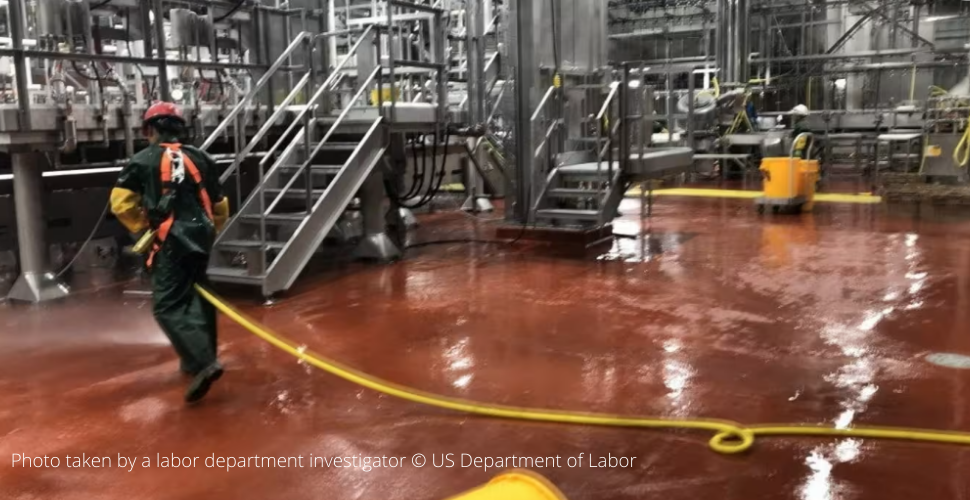
Take Packer Sanitation Services, a Blackstone portfolio company, for example. Packers provides cleaning services to meatpackers like Tyson Foods. Despite Blackstone’s anti-child labor policies, Packers was found to have employed at least 102 children across various locations in the U.S. While doing this hazardous job, children have suffered severe acid burns, worked illegal overnight shifts, and have gotten entangled in dangerous machinery resulting in amputation. This prompted a U.S. Department of Labor investigation and a lawsuit against Packers. However, despite Blackstone condemning the violation of anti-child-labor policies, Packers faced relatively trivial legal consequences, paying $1.5 million in civil fines.
What do you think?
The Packers case serves as a cautionary tale, begging the question of whether the private equity business model is sufficient in preventing exploitation, labor abuses, and human rights risks.
Tell us what you think! Answer any of Financial Times’s questions in the comments.
Do private equity firms or their investors bear any responsibility for labor rights violations by their portfolio companies?
Should private equity firms seek to address the human rights risks posed to those working in their supply chains, regardless of whether they directly or indirectly own or operate the facilities involved?
To what extent should these organizations be held accountable?




Freedom United is interested in hearing from our community and welcomes relevant, informed comments, advice, and insights that advance the conversation around our campaigns and advocacy. We value inclusivity and respect within our community. To be approved, your comments should be civil.
A few things we do not tolerate: comments that promote discrimination, prejudice, racism, or xenophobia, as well as personal attacks or profanity. We screen submissions in order to create a space where the entire Freedom United community feels safe to express and exchange thoughtful opinions.